
Comprehensive Recovery from Sports Injuries: Returning to Safe, Peak Performance
Picture yourself mid-stride during a weekend trail run, cutting sharply across the basketball court, or aiming for a personal best in the weight room, only to feel a sudden pop in your knee or a sharp twinge in your shoulder. In a split second, your momentum comes to a halt.
Dealing with sports injuries can be deeply frustrating, especially when physical activity is central to your health and mental well-being. Whether you are a dedicated competitive athlete or a weekend warrior, dealing with unexpected physical setbacks brings worry about downtime, joint stability, and long-term performance.
Addressing athlete injuries promptly with structured medical evaluation ensures that micro-tears and joint sprains heal correctly, preventing recurring weakness down the road.
At Specialty Care Clinics, our multidisciplinary team blends advanced diagnostic testing with personalized physical rehabilitation to get you moving again with confidence.
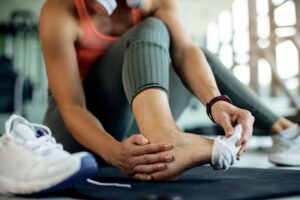
Understanding Acute vs. Chronic Athletic Trauma
Not every athletic physical setback happens in an instant. Understanding how physical damage occurs helps you spot trouble early and make informed decisions about your care.
Physical Impact / Strain Event
│
├── Acute Trauma (Sudden pops, twists, or falls)
│ │
│ ▼
│ Immediate Pain & Swelling → Swift Stabilization & Imaging
│
└── Overuse Trauma (Repetitive micro-stress)
│
▼
Gradual Aching & Inflammation → Postural & Biomechanical Correction
Acute Athletic Conditions
These occur from sudden, high-force events like twisting an ankle on an uneven soccer field or taking a hard hit on the field:
- Ligament Sprains and Tears: Cruciate ligament (ACL/PCL) tears or ankle sprains caused by sudden directional shifts or awkward landings.
- Joint Dislocation and Fractures: Impact forces that pop shoulder or finger joints out of alignment or cause bone stress fractures.
- Acute Muscle Strains: Severe tears in hamstring, calf, or groin muscle fibers during high-speed sprinting.
Chronic Overuse Issues
These develop gradually when repetitive physical motion creates micro-trauma faster than your body can repair itself:
- Tendinitis and Tendinopathy: Persistent swelling in the Achilles, patellar, or rotator cuff tendons.
- Shin Splints and Stress Fractures: Microscopic cracks in lower leg bones caused by repetitive pounding on hard pavement.
- Tennis or Golfer’s Elbow: Repetitive forearm strain that inflames outer or inner elbow joints.
Addressing an injured sports condition before joint irritation turns into long-term scar tissue protects your natural range of motion.
The Path to Complete Athletic Recovery
Recovering from a severe sport injury requires a clear, step-by-step approach. Skipping steps or rushing back onto the field too early often leads to reinjury and prolonged downtime.
Step 1: Clinical Diagnosis & Imaging ──► Step 2: Targeted Pain Control & Inflammation
│
▼
Step 4: Functional Return-to-Play ◄── Step 3: Progressive Strength Rehabilitation
Accurate Diagnostic Assessment
A physical examination tests joint range, muscle balance, and nerve reflexes. Digital X-rays verify bone integrity, while high-resolution MRIs visualize deep soft tissues, cartilage, and ligaments.
When head impacts or concussions occur alongside joint trauma, our neurology specialists evaluate cognitive health and neurological reflexes to ensure safe clearance before active play resumes.
Targeted Physical Rehabilitation
Rehabilitation focuses on rebuilding muscle groups around affected joints. Guided stretching restores tissue flexibility, while stabilizing exercises correct form errors that contributed to the initial strain.
To learn more about non-surgical joint care and joint restoration options, explore our dedicated orthopedics page.
Triage Guide: Self-Care vs. Medical Care
It can be difficult to know whether a sprain will heal with rest or needs professional attention. Use this guide to help you decide:
| Physical Symptom | Injury Severity Level | Recommended Care Action |
| Mild muscle soreness, minimal swelling, full joint bearing | Low / Mild Strain | Rest, Ice, Compression, Elevation (RICE) |
| Persistent joint swelling, reduced range of motion, dull aching | Moderate / Sub-Acute | Outpatient Medical Evaluation |
| Inability to bear weight, visible joint deformity, sharp pain | Severe / Acute | Prompt Specialty Evaluation |
| Radiating limb numbness, tingling sensations, sudden weakness | Neurological / Nerve | Neurology Evaluation |
| Deep, chronic joint pain lasting over two weeks | Chronic Inflammatory | Pain Management Care |
Practical Tips for Injury Prevention
Preventing an injury sport setback is always easier than treating one. Integrating these evidence-based clinical practices into your workout routine shields your body from avoidable physical strain:
- Commit to Dynamic Warm-Ups: Spend 8 to 10 minutes performing active movements like leg swings, lunges, and arm circles to increase blood flow before high-intensity workouts.
- Prioritize Progressive Overload: Increase training volume, speed, or weight loads gradually—by no more than 10% per week—to give tendons time to adapt.
- Cross-Train to Prevent Overuse: Alternate high-impact running with swimming or cycling to build endurance while giving joints a break.
- Maintain Balanced Hydration and Nutrition: Proper fluid balance keeps muscles elastic, while protein and essential minerals support daily tissue repair.
Frequently Asked Questions
1. How do I know if an injury requires an MRI scan?
If severe swelling, joint instability, or sharp pain persists despite rest, or if your doctor suspects a torn ligament or meniscus, an MRI scan provides detailed images of soft tissues that X-rays cannot show.
2. Should I apply ice or heat to a fresh athletic injury?
Apply ice during the first 48 hours to reduce acute swelling and numb sharp pain. Switch to moist heat after 48 hours to relax tight muscle tissue and increase localized blood circulation.
3. How long does it take to recover from a muscle strain or sprain?
Mild grade-1 sprains typically improve within 2 to 3 weeks with guided care. Moderate to severe grade-2 or grade-3 tears require structured rehabilitation lasting anywhere from 6 weeks to several months.
4. What is the risk of returning to activity before an injury fully heals?
Returning too early increases the risk of chronic joint instability, compensatory strain on neighboring joints, permanent scar tissue formation, and long-term cartilage wear.
5. Can physical therapy help prevent future joint injuries?
Yes. Physical therapy corrects underlying muscle imbalances, improves joint alignment, and teaches proper movement mechanics that protect joints during high-impact activities.
Reclaim Your Performance at Specialty Care Clinics
Physical setbacks do not have to put an end to your active lifestyle. With an accurate diagnosis, targeted physical therapy, and expert medical guidance, you can overcome pain, rebuild strength, and return to the sports you love safely.
At Specialty Care Clinics, our sports medicine and orthopedic specialists provide comprehensive care designed around your athletic goals.
Don’t let joint pain keep you on the sidelines. Schedule your appointment with Specialty Care Clinics today and start your journey back to safe, peak performance!