
Neurosurgery Near Me: Finding the Right Specialized Medical Team for Brain and Spine Care
When the electrical wiring in a house shorts out, the lights flicker, appliances stop working, and the entire system becomes unstable. Your nervous system operates in a very similar way. As the master control panel of your body, it handles every breath you take, every step you walk, and every memory you form.
When a spinal disc raptures, a nerve gets crushed, or a complex issue arises in the brain, the signals break down. It can cause sudden weakness, agonizing pain, or terrifying numbness.
If you are facing these symptoms, typing neurosurgery near me into a search engine is a crucial first step toward finding answers. Facing nerve or structural trauma can feel completely overwhelming.
At Specialty Care Clinics, our highly specialized neurosurgery center combines compassionate, human patient care with advanced clinical procedures to pinpoint the issue and safely restore your quality of life.
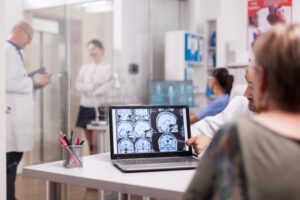
What Exactly Is Neurosurgery? Demystifying the Field
A common misconception is that the word neurosurgery only refers to complex brain operations. In reality, the overwhelming majority of neurosurgical procedures focus on the spine and peripheral nerves.
A licensed neurological surgeon is uniquely trained to handle the delicate structures of your entire central nervous system. This includes everything from a pinched nerve in your neck to complex structural conditions within the skull.
+————————————————————————+
| THE CORE AREAS OF NEUROSURGICAL EXPERTISE |
+—————————————-+——————————-+
| CERVICAL & LUMBAR SPINE | Treating herniated discs, |
| | sciatica, and spinal stenosis |
+—————————————-+——————————-+
| CRANIAL CARE | Managing brain trauma, cysts, |
| | tumors, and aneurysms |
+—————————————-+——————————-+
| PERIPHERAL NERVES | Treating carpal tunnel and |
| | complex nerve injuries |
+—————————————-+——————————-+
Because our nervous system is incredibly sensitive, finding a highly trained team is non-negotiable. Specialized centers do not just focus on the surgical table; they emphasize comprehensive diagnostics, targeted rehabilitation, and preventative care plans to avoid surgery whenever possible.
The Key Specialists: Brain Surgeons vs. Spine Surgeons
The human body requires specialized experts for different anatomical pathways. Depending on your diagnosis, your treatment will be managed by a specific type of surgical expert.
1. Spine Surgeon
While some orthopedic specialists focus entirely on bones, a neurosurgical spine surgeon focuses on the complex relationship between the spinal column and the highly sensitive spinal cord. Conditions like lumbar stenosis—where the bony canal narrows and chokes your nerves—demand this specific dual understanding of bone mechanics and nerve tracking. They work to remove structural pressure, stabilizing the vertebrae without compromising nerve pathway health.
2. Brain Surgeon
When a patient requires direct treatment inside the skull, they see a specialized brain surgeon. These experts manage conditions like traumatic brain injuries from a bad fall, fluid build-up, and benign or malignant tumors. Utilizing ultra-precise microscopic tools and real-time computer navigation, they map out safe surgical pathways to protect healthy brain tissue while fixing the underlying issue.
Advanced Treatment Pathways at Specialty Care Clinics
We strongly believe that a surgical procedure should always be the final option, not the first choice. Our multi-specialty medical facility brings together multiple medical teams under one roof to build an integrated recovery track.
If you visit us with severe back pain or shooting leg agony, our neurological team often works closely with our pain management services to explore minimally invasive treatments first. This may include targeted epidural steroid injections or specialized physical therapy to calm nerve inflammation.
However, if your diagnostics reveal progressive muscle weakness, structural instability, or significant nerve compression, surgical intervention becomes the safest choice to prevent permanent, irreversible loss of function. Our surgical pathways include:
- Microdiscectomy: A minimally invasive procedure where a specialist removes a tiny piece of a herniated disc to stop it from rubbing against a nerve root.
- Laminectomy: Removing a small portion of the spinal bone to instantly create more space within a narrowed spinal canal.
- Spinal Fusion: Safely connecting two unstable vertebrae to completely eliminate painful, arthritic friction during movement.
Frequently Asked Questions
1. What are the clear signs that I need to see a neurosurgeon?
You should seek an evaluation if you experience persistent numbness, a sudden loss of muscle strength in your arms or legs, severe radiating pain that shoots down your limbs, or a noticeable loss of balance when walking.
2. Does seeing a neurosurgeon mean I will automatically need surgery?
No. Most consultations focus on detailed diagnostics and non-surgical treatments. Surgery is only recommended if conservative care options fail to improve your condition or if your nerve function is actively worsening.
3. What is the primary difference between a neurologist and a neurosurgeon?
A neurologist diagnoses and treats neurological conditions using medical therapies and oral medications. A neurosurgeon can provide those same medical evaluations but is also fully licensed to perform surgical procedures if structural repairs are needed.
4. How long is the typical recovery period after a spinal procedure?
While acute surgical healing usually takes about four to six weeks, many modern, minimally invasive procedures allow patients to walk comfortably on the very same day as their surgery.
5. What causes a spinal nerve to become compressed?
Nerve compression is usually caused by a herniated disc slipping out of place, arthritic bone spurs growing inside the spinal canal, or sudden trauma from a vehicle crash or heavy fall.
6. How do specialists map out a brain surgery safely?
Surgeons utilize advanced, high-resolution MRI scans alongside real-time 3D computer mapping systems. This acts like a GPS for the brain, allowing them to see the exact location of the issue down to the millimeter.
Reclaim Your Physical Future
Living with a complex spinal condition or a severe nerve issue can make your daily life feel restricted and small. It keeps you from enjoying your hobbies, working comfortably, and spending meaningful time with the people you love.
At Specialty Care Clinics, we provide the absolute clarity, expert medical evaluation, and advanced technical precision you deserve. Let our compassionate team of specialists guide you through every step of your diagnosis, treatment, and eventual return to full mobility.
Do not let progressive nerve pain or structural issues limit your health. Contact Specialty Care Clinics today to schedule your comprehensive evaluation.