
Bounce Back Faster: Your Complete Guide to Knee Ligament Injury Treatment
Imagine you’re out on the soccer field, cutting sharply to chase down a loose ball. Suddenly, you hear a sickening pop, followed by a sharp flash of pain on the inside of your knee. Within hours, swelling sets in, and walking feels like balancing on a bowling ball.
If this sounds familiar, you aren’t alone. Knee injuries are incredibly common, whether you are an elite athlete or someone who simply tripped over a rogue dog toy in the living room. When it comes to joint instability, understanding your options for knee ligament injury treatment is the first step toward getting your active life back.
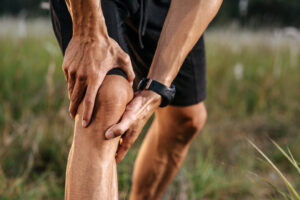
In this guide, we will break down exactly how these injuries happen, look closely at a common culprit—medial ligament injuries—and explore the most effective therapy for knee ligament injuries so you can heal safely and quickly.
Anatomy 101: What Did You Actually Break?
Your knee is essentially a hinge held together by a network of tough, fibrous bands called ligaments. Think of them as heavy-duty bungee cords that keep your thigh bone connected to your shin bone.
There are four primary ligaments prone to sprains and tears:
- Anterior Cruciate Ligament (ACL): Controls forward movement and rotation.
- Posterior Cruciate Ligament (PCL): Controls backward movement.
- Medial Collateral Ligament (MCL): Sits on the inside of your knee and prevents it from collapsing inward.
- Lateral Collateral Ligament (LCL): Sits on the outside of your knee and prevents it from collapsing outward.
When we talk about medial ligament injuries, we are usually talking about the MCL. This injury typically happens when a force hits the outside of the knee, forcing the joint to buckle inward. It’s incredibly common in contact sports like football, hockey, and rugby.
The Three Grades of Knee Ligament Severity
Before jumping into a treatment plan, a doctor or physical therapist will grade your injury. This classification acts as a roadmap for your recovery timeline.
| Injury Grade | What Happened | Symptoms | Typical Recovery Time |
| Grade 1 (Mild) | Microscopic stretching or minor tears in the fibers. | Mild tenderness, slight swelling, no major instability. | 1 to 3 weeks |
| Grade 2 (Moderate) | Partial tear of the ligament. | Noticeable pain, localized swelling, mild feeling of the knee “giving way.” | 4 to 8 weeks |
| Grade 3 (Severe) | Complete tear (rupture) of the ligament. | Severe pain initially, major swelling, bruising, unable to bear weight. | 2 to 6 months (or longer) |
Immediate Care: The PRICE Protocol
The moment an injury occurs, your primary goal is inflammation control. For the first 48 to 72 hours, forget about pushing through the pain. Instead, lean heavily on the PRICE protocol:
- Protect: Safeguard the joint from further trauma using a brace, crutches, or a splint.
- Rest: Avoid activities that cause pain or place weight on the injured leg.
- Ice: Apply ice packs wrapped in a thin towel for 15–20 minutes every few hours. This constricts blood vessels and numbs the throbbing ache.
- Compress: Use an elastic compression bandage to keep swelling from pooling in the joint space. Ensure it isn’t wrapped so tightly that it cuts off circulation.
- Elevate: Keep your knee propped up on pillows above the level of your heart whenever you are sitting or lying down.
Advanced Therapy for Knee Ligament Injuries
Once the initial throbbing subsides, the real work begins. True healing doesn’t happen on the couch; it happens through targeted movement. Utilizing physical therapy for knee ligament injuries is vital to ensure the ligament heals at its correct length and retains its elasticity.
1. Restoring Range of Motion (ROM)
In the early days of recovery, scar tissue begins to form. If you keep your knee completely straight or permanently bent, that scar tissue tightens, leaving you with a permanent limp. Physical therapists use gentle heel slides and passive stretches to ensure you can fully straighten and flex your knee.
2. Muscle Activation and Strengthening
A joint is only as strong as the muscles surrounding it. When a ligament is damaged, the brain often “shuts off” the quadriceps muscle to protect the area. Exercises like straight leg raises, quad sets, and hamstring curls help wake those muscles up.
3. Proprioception and Balance Training
Ever wonder how you can walk on uneven grass without looking at your feet? That is proprioception—your body’s internal GPS. Ligaments are packed with nerve receptors that tell your brain where your joint is in space. Injury disrupts this system. Training with wobble boards and single-leg balances recalibrates your joint mechanics to prevent future sprains.
Choosing the Right Knee Ligament Injury Treatment
Not all injuries require a trip to the operating room. In fact, the vast majority of medial ligament injuries heal beautifully without surgery because the MCL has an excellent blood supply.
Non-Surgical Approaches
For Grade 1 and Grade 2 sprains, conservative management is the gold standard. This involves using a hinged knee brace to protect the joint from lateral movements while allowing it to bend freely. Combined with targeted physical therapy, most people return to light activities within a couple of months.
When Surgery is Necessary
Surgical intervention is usually reserved for:
- Complete Grade 3 tears of the ACL (which rarely heals on its own due to poor intra-joint blood flow).
- Multi-ligament injuries (e.g., tearing both your ACL and MCL simultaneously).
- Chronic joint instability where the knee continues to give out despite months of physical therapy.
Modern ligament surgery is highly advanced, typically utilizing arthroscopic techniques (small incisions and tiny cameras) to reconstruct the torn band using a tissue graft from your own hamstring or a donor.
Pro Tip from a Physical Therapist: “Many patients make the mistake of stopping their exercises the moment the pain disappears. Pain is a terrible indicator of tissue structural strength. Stick to your rehab plan until your therapist explicitly clears you.”
- Wondering if you need a support? Check out our review of the best knee braces for sports.
Frequently Asked Questions
How long does a medial ligament injury take to heal?
A mild Grade 1 medial collateral ligament (MCL) sprain can heal within 1 to 3 weeks with proper rest and basic therapy. A severe, complete Grade 3 tear can take anywhere from 8 to 12 weeks, or even longer if surgical intervention is required.
Can you walk with a torn knee ligament?
It depends on which ligament is torn and the severity of the injury. With a Grade 1 or 2 MCL tear, you may be able to walk with a limp or the support of a hinged brace. However, walking on a freshly ruptured ACL or a multi-ligament injury is highly discouraged due to extreme joint instability.
Is cycling good therapy for knee ligament injuries?
Yes, stationary cycling is an excellent component of physical therapy once your doctor or therapist clears you for range-of-motion exercises. It provides a low-impact workout that promotes blood flow, reduces stiffness, and strengthens the quadriceps without placing heavy impact loads on the joint.
How do I know if my knee injury is a ligament tear or a meniscus tear?
While both cause pain and swelling, ligament tears often involve an audible “pop” at the moment of injury followed by a distinct feeling of joint instability (the knee giving out). Meniscus tears often manifest as a localized catching, clicking, or locking sensation when bending the knee. A clinical exam and an MRI are required for a definitive diagnosis.
What happens if a knee ligament injury goes untreated?
Ignoring a significant ligament injury can lead to chronic joint instability, altered walking mechanics, and compensatory pain in your hips or lower back. Over time, the abnormal friction inside the joint drastically accelerates the wear and tear of cartilage, leading to early-onset osteoarthritis.
Should I wear a knee brace all day after a sprain?
During the acute phase of a moderate-to-severe sprain, your doctor may recommend wearing a brace during waking hours to prevent accidental twisting. However, you should generally remove it during sleep and specific rehab exercises to prevent muscle atrophy and joint stiffness.
Your Path Back to Peak Performance
Dealing with a knee injury is undeniably frustrating. It tests your patience just as much as it challenges your physical body. However, remember that your body is remarkably resilient. By securing an accurate diagnosis early, sticking to a structured knee ligament injury treatment protocol, and committing to targeted physical therapy, you can rebuild a joint that is just as strong—if not stronger—than it was before the injury.
Listen to your body, celebrate the small milestones, and don’t rush the process. Your knees will thank you down the road.
Visit Us our https://specialtycareclinics.com/services/injury-management/ Experienced injury management specialists provide comprehensive evaluation and advanced treatment options for injury management and other spinal conditions.
Contact us at 972-937-8900 and schedule your consultation today to receive personalized thoracic spine injury treatment and start your journey toward pain relief and recovery.