
Understanding Soft Tissue Injuries: How Specialized Care Restores Your Mobility
Picture this everyday scenario: you step off a curb slightly off-balance, feel an uncomfortable twist in your ankle, and instantly experience a sharp throbbing sensation. Or perhaps you were involved in a minor fender bender yesterday, felt completely fine at the scene, but woke up this morning with a stiff neck and aching shoulders.
It is easy to assume that if no bones are broken, everything inside is perfectly intact. However, hidden micro-tears within muscles, tendons, and ligaments can cause persistent discomfort that lingers for weeks.
Dealing with soft tissue injuries requires a clear diagnostic approach and structured physical rehabilitation. Whether you are managing a recent sports sprain, an occupational strain, or an auto accident setback, early medical intervention protects your joints from chronic stiffness and long-term instability.
At Specialty Care Clinics, our multidisciplinary team provides clear diagnostic evaluations and comprehensive recovery plans designed to get you moving again without pain.
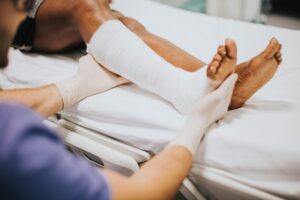
What Are Soft-Tissue Injuries and How Do They Occur?
Your soft tissues comprise the connective matrix that holds your skeleton together, enables body movement, and absorbs daily physical shock. This network includes muscles, tendons (which anchor muscle to bone), ligaments (which stabilize bone to bone), and bursae (fluid-filled sacs that reduce friction between tissues).
When sudden impact, awkward twists, or repetitive overuse forces these tissues past their natural elasticity, structural damage occurs. Understanding how damaged soft tissue behaves internally explains why pain and swelling often peak hours or days after the initial event.
Sudden Physical Force / Repetitive Stress
│
▼
Microscopic Tears in Muscle, Tendon, or Ligament Fibers
│
▼
Inflammatory Response (Swelling, Stiffness & Delayed Pain)
│
├── Early Specialist Care → Targeted Physical Rehab → Full Muscle Flexibility
└── Neglected Soft Injury → Scar Tissue Accumulation → Chronic Joint Instability
Unlike broken bones, a soft injury tissue response may not show up on basic digital X-rays. Partnering with a specialist ensures your recovery relies on precise physical assessments and advanced imaging like high-resolution MRIs.
Common Types of Soft Tissue Damage
Soft tissue trauma presents differently depending on the joint involved and how the physical stress occurred:
1. Ligament Sprains
Ligaments are tough, fibrous bands that hold your joints stable. An ankle twist or knee pivot stretches or tears these bands, creating rapid swelling, localized bruising, and joint instability.
2. Muscle and Tendon Strains
Strains happen when muscle fibers or supporting tendons stretch too far or contract too forcefully. Commonly affected areas include the hamstrings, lower back, and shoulder cuff muscles.
3. Deep Contusions (Severe Bruising)
Direct physical force or blunt impact crushes underlying muscle fibers and blood vessels without breaking the skin. Blood pools beneath the tissue, causing discoloration, deep throbbing pain, and stiffness.
4. Tendinitis and Bursitis
Repetitive daily movements—such as typing, painting, or tennis swings—cause chronic micro-friction. This inflames surrounding tendons or fluid bursae sacs, leading to burning pain during simple daily tasks.
The Phased Healing Process of Damaged Tissue
Biological repair follows a predictable timeline, but skipping recovery steps increases the risk of reinjury:
Phase 1: Inflammatory Stage (Days 1–5) ──► Redness, swelling, and localized tenderness
│
▼
Phase 2: Repair & Proliferation (Weeks 1–6) ──► Collagen tissue synthesis & scar tissue formation
│
▼
Phase 3: Remodeling Phase (Months 2–12) ──► Realignment of fibers for strength & flexibility
Without guided physical rehabilitation during Phase 2 and Phase 3, collagen fibers lay down randomly. This creates stiff, inelastic scar tissue that restricts natural motion.
Triage Guide: When to Treat at Home vs. Seek Specialist Care
Distinguishing between a mild strain and a significant soft tissue damage event helps you choose the right care pathway:
| Symptom / Observation | Injury Severity Level | Recommended Care Action |
| Mild tenderness, minor swelling, full joint weight-bearing | Low / Mild Grade-1 | Rest, Ice, Compression, Elevation (RICE Protocol) |
| Noticeable swelling, visible bruising, limited mobility | Moderate / Grade-2 | Outpatient Specialist Medical Evaluation |
| Inability to bear weight, visible joint deformity, acute pop | Severe / Grade-3 Tear | Immediate Clinical Diagnostic Assessment |
| Radiating tingling sensations, leg weakness, numbness | Neurological Involvement | Combined Neurology Assessment |
| Chronic deep joint soreness lasting longer than two weeks | Chronic Inflammatory | Integrated Pain Management Care |
If joint strain is accompanied by persistent joint stiffness, consulting our orthopedics team ensures structural joint stability is properly restored.
Practical First-Aid and Preventative Best Practices
Taking smart steps immediately following an injury—and during daily workouts—accelerates overall tissue healing:
- Apply the PEACE Protocol First: Protect the joint from further strain, Elevate the limb above heart level, Avoid anti-inflammatory medications during the first 24 hours (to allow initial healing signals), Compress gently with a bandage, and Educate yourself on conservative care.
- Avoid Early High Heat Application: Applying hot packs during the first 48 hours increases local blood circulation and worsens swelling.
- Warm Up Before Exercise: Dynamic stretches prepare muscles and tendons for physical stress, reducing the risk of sudden micro-tears.
- Cross-Train to Avoid Overuse: Alternate high-impact activities with low-impact swimming or cycling to give connective tissues adequate recovery time.
Frequently Asked Questions
1. Why doesn’t a soft tissue injury show up on an X-ray?
X-rays pass through soft tissues like muscles, tendons, and ligaments to capture dense bone structures. To view damaged soft tissue clearly, physicians use soft-tissue ultrasound or high-resolution MRI scans.
2. How long does a mild to moderate sprain take to heal?
Mild Grade-1 sprains typically recover within 2 to 3 weeks with proper rest and rehabilitation. Moderate to severe Grade-2 tears require 6 to 8 weeks of guided therapy to regain strength.
3. Is swelling after an injury a good or bad sign?
Swelling is your body’s natural defense mechanism, delivering repair cells and fluid to protect damaged fibers. However, excessive swelling restricts joint movement and requires controlled compression and elevation.
4. Can an untreated soft tissue injury lead to chronic arthritis?
Yes. When torn ligaments heal loosely without medical stabilization, the affected joint moves unevenly. This abnormal friction wears down joint cartilage prematurely over time.
5. When can I safely return to sports or heavy lifting?
You can return to full activity once you have regained painless range of motion, equal muscle strength compared to your uninjured limb, and clearance from your healthcare specialist.
Reclaim Your Physical Vitality with Specialty Care Clinics
Living with localized joint stiffness, throbbing soreness, or muscle weakness disrupts your daily productivity and peace of mind. You do not have to wait for an untreated soft tissue injury to turn into long-term joint pain.
At Specialty Care Clinics, our experienced team delivers accurate diagnostic imaging, targeted physical rehabilitation, and compassionate care tailored to your active lifestyle.
Take the first step toward lasting mobility. Schedule your evaluation with Specialty Care Clinics today and let our specialists guide your full recovery!